Empowering Workforce Intelligence with Payroll and Time Analytics
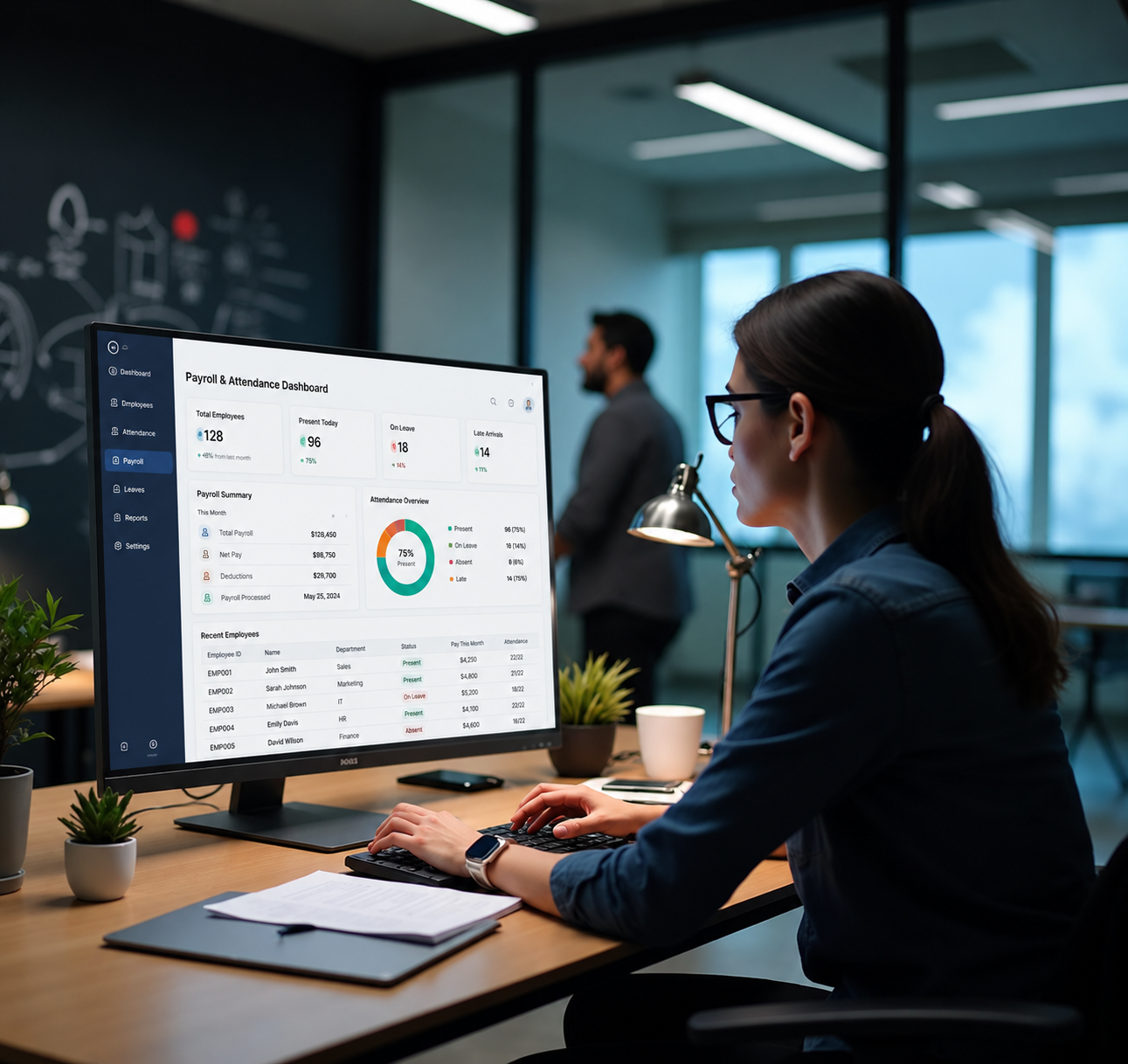
Enhanced a cloud-based Human Capital Management platform with integrated Oracle Analytics, enabling customer-facing workforce insights, creating new revenue opportunities, and delivering greater business value through self-service reporting.
2
Workforce analytics domains enabled through Oracle BI
1
Customer-facing analytics platform integrated with the HCM solution
1
Custom data warehouse implemented to support workforce analytics
A Human Capital Management software provider sought to enhance its cloud-based platform by introducing analytics capabilities for Payroll and Time & Attendance functions. The organization viewed analytics as an opportunity to increase customer value, differentiate its offering, and create new revenue opportunities.
DiLytics implemented a Payroll and Time & Attendance Analytics solution using Oracle BI, integrating data from the client’s cloud platform into a custom analytics data warehouse. The solution delivered workforce reporting and analytical capabilities that could be offered directly to customers as part of the HCM platform.
The implementation created a new analytics-based revenue opportunity, improved customer satisfaction, strengthened the competitiveness of the client’s solution, and enabled customers to gain deeper visibility into workforce and payroll performance.
A Human Capital Management software provider sought to enhance its cloud-based platform by introducing analytics capabilities for Payroll and Time & Attendance functions. The organization viewed analytics as an opportunity to increase customer value, differentiate its offering, and create new revenue opportunities.
DiLytics implemented a Payroll and Time & Attendance Analytics solution using Oracle BI, integrating data from the client’s cloud platform into a custom analytics data warehouse. The solution delivered workforce reporting and analytical capabilities that could be offered directly to customers as part of the HCM platform.
The implementation created a new analytics-based revenue opportunity, improved customer satisfaction, strengthened the competitiveness of the client’s solution, and enabled customers to gain deeper visibility into workforce and payroll performance.
Submit Your Details to See the Complete Transformation Story
Transformation Unlocked!
Use the top navigation menu or scroll down to explore the details.
Client Overview
The client provides cloud-based Payroll, Time & Attendance, Human Resources, Recruitment, and Benefits Administration solutions through its proprietary Human Capital Management platform. The company delivers software, hosting, maintenance, security, and support services to a broad customer base seeking modern workforce management capabilities.
Industry: Human Resources / Workforce Management
Location: Los Angeles County, California
Focus Areas: Payroll, Time & Attendance, HR/Workforce Analytics
Primary Stakeholders: HR, Payroll, and Business Leaders
Overcoming Workforce Data Silos & Manual Reporting Challenges
The client faced challenges in consolidating payroll and attendance information from multiple systems. Existing reporting processes relied heavily on manual effort, resulting in delayed insights, limited visibility into workforce trends, and difficulties in monitoring compliance and labor costs.
Centralized Payroll and Workforce Analytics for Better Decision-Making
DiLytics designed and implemented a Payroll and Time & Attendance Analytics solution leveraging Oracle Analytics. The solution integrated data from the client’s cloud platform into a custom data warehouse and delivered analytics capabilities that could be offered as a value-added service to customers.
Services Provided
Conducted business requirements gathering and solution planning
Performed infrastructure sizing and environment setup
Designed and implemented a custom analytics data warehouse
Developed ETL processes and data integration workflows
Designed Oracle BI metadata and reporting models
Developed reports and dashboards
Conducted conference room pilots, testing, training, and deployment activities
Enabled customer-facing analytics capabilities within the HCM platform
Business Solution
The solution delivered analytics capabilities across two major workforce management areas:
Payroll Analytics: Providing visibility into payroll trends, payroll processing metrics, workforce costs, and payroll performance indicators
Time & Attendance Analytics: Providing visibility into employee attendance patterns, workforce utilization, labor tracking, and time management metrics
Technical Solution
Integrated data from the client’s cloud-based HCM application
Designed and implemented a custom analytics data warehouse
Developed ETL processes using Microsoft SQL Server Integration Services (SSIS)
Implemented Oracle Analytics as the reporting platform
Conducted business requirements gathering and solution planning
Performed infrastructure sizing and environment setup
Designed and implemented a custom analytics data warehouse
Developed ETL processes and data integration workflows
Designed Oracle BI metadata and reporting models
Developed reports and dashboards
Conducted conference room pilots, testing, training, and deployment activities
Enabled customer-facing analytics capabilities within the HCM platform
Business Solution
The solution delivered analytics capabilities across two major workforce management areas:
Payroll Analytics: Providing visibility into payroll trends, payroll processing metrics, workforce costs, and payroll performance indicators
Time & Attendance Analytics: Providing visibility into employee attendance patterns, workforce utilization, labor tracking, and time management metrics
Technical Solution
Integrated data from the client’s cloud-based HCM application
Designed and implemented a custom analytics data warehouse
Developed ETL processes using Microsoft SQL Server Integration Services (SSIS)
Implemented Oracle Analytics as the reporting platform
Driving Business Value Through Advanced HR Analytics Transformation
The analytics solution transformed the HCM platform into a more competitive, insight-driven offering by enabling self-service workforce reporting, improving customer satisfaction, and creating new business opportunities.
New Revenue Generation
Created an analytics-enabled service offering that opened new revenue opportunities for the HCM platform
Enhanced Customer Satisfaction
Delivered integrated workforce analytics that improved customer experience and platform value
Increased Product Competitiveness
Strengthened the HCM solution with embedded analytics capabilities that differentiated it in the marketplace
Self-Service Workforce Reporting
Enabled customers to independently analyze payroll and workforce data through intuitive reporting tools
Improved Payroll and Workforce Visibility
Provided deeper insights into payroll trends, workforce costs, attendance patterns, and labor utilization
Scalable Analytics Foundation
Established a flexible analytics architecture capable of supporting future expansion across additional HR and workforce management domains
New Revenue Generation
Created an analytics-enabled service offering that opened new revenue opportunities for the HCM platform
Enhanced Customer Satisfaction
Delivered integrated workforce analytics that improved customer experience and platform value
Increased Product Competitiveness
Strengthened the HCM solution with embedded analytics capabilities that differentiated it in the marketplace
Self-Service Workforce Reporting
Enabled customers to independently analyze payroll and workforce data through intuitive reporting tools
Improved Payroll and Workforce Visibility
Provided deeper insights into payroll trends, workforce costs, attendance patterns, and labor utilization
Scalable Analytics Foundation
Established a flexible analytics architecture capable of supporting future expansion across additional HR and workforce management domains
Technical Stack
The solution leveraged Oracle’s analytics ecosystem to integrate payroll, time attendance, and workforce data across multiple HR and operational systems.
Data Source(s)
Data Integration
Data Warehouse
Data Visualization
Client’s Cloud Application
Custom
Data Sources
Client’s Cloud Application
Data Integration
Data Warehouse
Custom
Data Visualization
Unlock the Full Potential of Your Workforce Data
Empower your HR and business teams with advanced payroll and workforce analytics solutions that improve visibility, optimize labor costs, and support data-driven workforce planning.